From Proposal to Decision: What Changes at Each Stage
Follow a policy proposal from discussion to approval, see how its text and status can change, and identify which body has authority to decide.
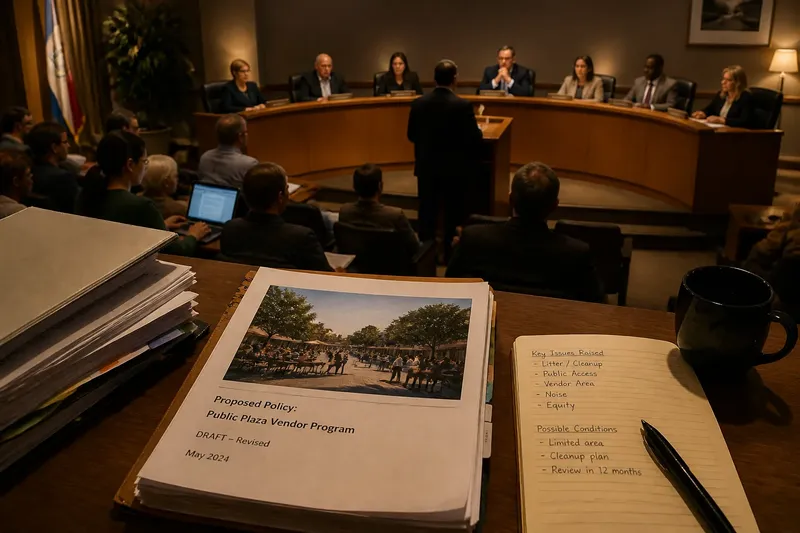
Has anyone actually decided to adopt the proposal on the agenda? To follow a policy proposal to a decision, separate the status of the text from the authority of the people discussing it. A lively debate, a favorable recommendation, and an adopted measure are different events.
Policy proposal stages
A proposal is an option for action, not a settled policy. It may come from an elected official, an agency, a community group, or a formal review, and its first version may say little beyond the problem it aims to address.
As officials consider it, they may clarify its goal, narrow its scope, add conditions, or request more information. A proposal to extend library hours, for instance, might be revised to cover selected branches after staff raise scheduling questions. That revision changes the proposal; it does not itself approve it.
Follow the procedural event that moves the item forward, rather than relying on its title or the order of documents in a packet. An agenda may list an item for discussion, a committee may send a recommendation onward, and a governing body may later take a separate action. The sequence and meaning of those events depend on the institution’s rules.
Discussion and direction
Discussion means participants are considering an idea; by itself, it does not show support or adoption. They may ask questions, hear public comments, identify concerns, or request further analysis.
Pay attention to the recorded action. “Received comments” describes consideration, while “directed staff to prepare options” assigns follow-up work. Neither phrase alone means the proposal will take effect.
Discussion can still alter what comes next. Questions may prompt a revised draft, a condition, or another meeting. The important distinction is between influencing a proposal and exercising authority to decide it.
Recommendations and authority
A recommendation is advice about a course of action offered to a person or body with decision-making authority. It may come from a committee, advisory board, staff team, or specialist review; the effect depends on the rules for that process.
A recommending body may favor one option, propose amendments, or advise against proceeding. The authorized decision-maker may accept the recommendation, revise it, return the matter for more work, or reject it. “Recommend adoption as amended” supports a particular version, not necessarily the original draft.
Before treating a recommendation as binding, check the body’s role under the relevant rules. A committee’s recommendation and a governing board’s decision may appear in the same packet, but they are not interchangeable.
Approval and conditions
Approval is an authorized decision to accept a proposal or a specified version of it. Look for the body or official taking the action and the official record of that action, such as a vote, signed order, or adopted resolution. A note that an item was considered does not, on its own, establish approval.
Approval may still depend on a future date, another authority’s action, or a stated condition. Separate “Was it approved?” from “What must happen before it operates?” A decision might authorize a program only after another formal action, for example; that condition limits what the approval means.
When wording is conditional, read the condition as part of the decision. A summary can make an outcome sound broader or more final than the adopted text does.
Changes along the way
Proposals can change through revised language, amendments, altered responsibilities, new eligibility rules, or added conditions. Compare the operative text, not just a summary of its purpose, which may omit limits and obligations.
Imagine a parks department proposes allowing food vendors at a public plaza. Residents raise concerns about litter and access; staff then revise the draft to limit the permitted area and require cleanup plans. An advisory committee recommends that version, and the authorized board approves it with a review condition. The observable result is a narrower approved policy with a stated obligation, not approval of the original, broader proposal.
To understand the change, compare what action is proposed, who is responsible, and what conditions apply. That comparison helps distinguish a change in policy reach from a wording clarification or an added implementation requirement.
Reading procedural signals
Terms such as “continued,” “tabled,” and “referred” can signal that an item has not been finally decided, but their precise meaning depends on the body’s procedures. Check the governing rules and the official record for what action was taken and what is scheduled next; do not infer status from a label alone.
For a useful status check, record each point below. If the record is missing or unclear, seek the relevant official document or ask the responsible office before treating the item as decided.
- Check whether the agenda says discussion, hearing, recommendation, or action; if it only schedules discussion, then treat the proposal as under consideration and look for a later decision record, otherwise confirm the stated action in the minutes.
- Check which body is acting and what authority its rules give it; if the body is advisory, then look for a later action by the authorized decision-maker, otherwise verify the specific authority used.
- Check whether the minutes record a motion, vote, referral, postponement, or other action; if the minutes say the matter was continued or referred, then check the rules and next agenda rather than treating it as approved, otherwise compare the recorded action with the final text.
- Check whether the draft or resolution includes amendments; if the adopted wording differs from the original, then use the amended text when describing the decision, otherwise confirm that the final record matches the version considered.
- Check for conditions, effective dates, or required follow-up actions; if any remain outstanding, then describe approval as conditional or not yet operative as applicable, otherwise verify whether another formal step is required.
- Check whether the official record includes an adopted resolution, order, or final policy text; if it does not, then ask the responsible office where the final action is recorded, otherwise read that text alongside the minutes to identify the approved version.
Which record answers your question?
Start with the official agenda and meeting minutes, then consult the attached staff report, draft text, and any adopted resolution or order. Minutes may summarize an action without reproducing every amendment, so use the final text when exact terms matter.
Say a neighborhood group sees an agenda item about adding food vendors to a plaza. The agenda labels it for discussion, the minutes record a request for staff options, and a later committee report recommends a restricted area with cleanup conditions. The group then checks the governing board’s later minutes and adopted text; if those show approval of that restricted version subject to a review condition, the answer is that the board approved the amended proposal with that condition—not that the initial draft took effect at the first meeting.
Where interpretation depends on a governing rule, official procedure, or legal text, consult the relevant authority or a qualified professional. Local processes differ, and a procedural label without its context may not settle what happened.
Questions about status?
Can a proposal be approved with amendments?
Yes, if the decision-maker has authority to approve the amended version and the action is properly recorded. Check the adopted text to see which amendments became part of the decision.
Does a recommendation mean officials agree?
It means the recommending body advised a course of action, not that the authorized decision-maker adopted it or that every participant agreed. Check the recorded recommendation and follow the item to its next decision point.
What does “continued” mean on an agenda?
It can indicate that consideration was postponed or carried forward, but the exact effect depends on the body’s procedures. Check the minutes, governing rules, and any later agenda before deciding the item’s status.
Where can I tell what was finally approved?
Look for the official record of the action and the adopted resolution, order, or final policy text. Read them together to identify who acted and which version the decision covers.
To follow a policy proposal to a decision, keep the procedural record beside the text that was acted on. When someone describes a proposal as “approved,” ask which authority acted, what version it approved, and whether any stated condition remains.